What Is Human Centric Lighting? A Quick Guide to HCL
Posted March 3, 2026 by Natalie

We spend around 90% of our time indoors yet our bodies are still wired for natural daylight. A lack of sunlight and its visual – as well as non-visual – benefits can be a nightmare for our health. So what can we do? Step forward Human Centric Lighting (HCL). We’re receiving growing interest in this emerging concept, so here's a simple overview to explain how HCL works, where it's used and why it matters.
Human Centric Lighting: A Definition
Electric lighting was originally designed for indoor spaces, not for the people who use them. By contrast, HCL:
- Is human-focused
- Blends dynamic electric light with natural daylight
- Supports mood, sleep, energy & productivity
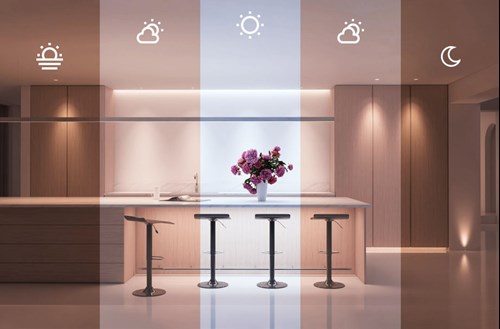
Contemporary kitchen light colour & intensity matched to the time of day.
HCL (also known as circadian, wellness or biodynamic lighting) is not a product – it’s a combination of insightful design and smart technology. Although it can’t replace daylight, increasing research shows that it can replicate some of its positive effects. Hooray!
How Does Human Centric Lighting Work?
Daylight is the most important factor in regulating our circadian rhythm. This internal 24-hour biological clock influences physiological processes such as the healthy production of melatonin (sleep hormone) and cortisol (alertness hormone).
The artificial light we use indoors is static; it doesn’t change in the same way that natural light changes due to:
- The day-night cycle
- Seasonal variation
- Weather patterns
- Global latitude
Artificial light disrupts our natural sleep-wake cycle whereas HCL works in closer harmony with our biological rhythms. Humans need dynamic light that mimics the light we see in nature – from dappled sunlight, to full midday sun, to glowing evening campfire – in order to optimally regulate our hormones and promote our general wellbeing.

Lighting should be designed for people, not just spaces. Human Centric Lighting recognises light as a biological driver, shaping how we feel, function and recover every day.

- Jack, Darklight Design Sales Executive
The Benefits of Human Centric Lighting
Scientific studies are showing that HCL:
1. Improves natural sleep cycles which:
- Promotes patient recovery in hospitals
- Improves traveller jet lag in hotels
2. Encourages better mood regulation in those affected by:
- Mental health issues
- Seasonal Affective Disorder (SAD)
- Dementia
3. Promotes health and wellbeing by providing:
- Better visual comfort
- Less eye strain & headaches
- Reduced cases of myopia (short-sightedness) in children
4. Increases productivity and focus by:
- Enhancing alertness in offices & schools
- Supporting shift workers during irregular working hours

HCL promotes better sleep, mood regulation, visual comfort & productivity.
How to Create a Human Centric Lighting System
Implement clever design, including:
- All the fundamentals of great lighting design e.g. visual comfort, glare control & layers of light
- Considering each individual environment, who uses it & how it is used
- Daylight integration with artificial light
- Lighting vertical surfaces, as well as horizontal
- Measuring how much light reaches the eye (not just the desk surface)
Utilise smart products, such as:
- Tunable LED lighting
- Automated intelligent controls
- Daylight & occupancy sensors
This smart technology allows for a dynamic lighting system by adjusting:
Light colour, e.g.:
- Cool white light (5000–7000K) boosts alertness
- Warm white light (2700–3500K) supports relaxation & sleep
Light intensity:
- Both light intensity and duration of exposure affect biological response
- E.g., research recommends our eyes are exposed to 250 melanopic lux for 30 mins in the morning to regulate our sleep cycles effectively
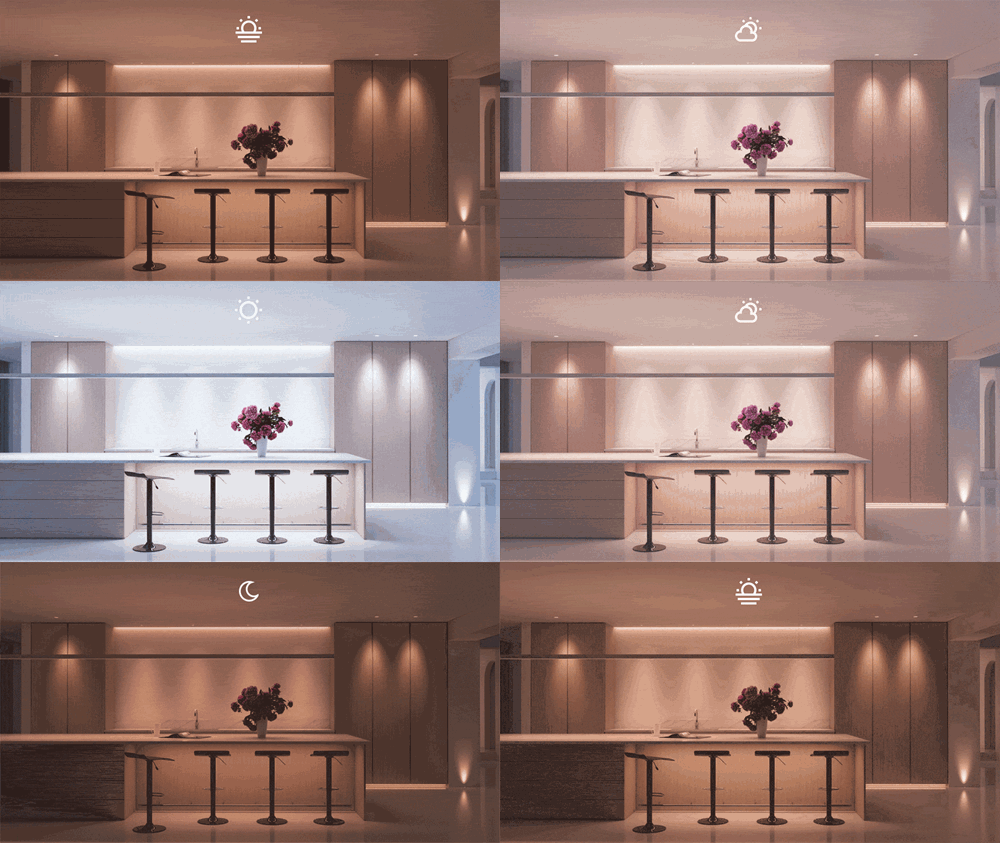
Animation of a dynamic Human Centric lighting system in a contemporary kitchen throughout the day.
Research, technology and best practices are still evolving, so it’s essential for HCL systems to be flexible in order to adapt to any changes necessary. To learn more, read our handy overview of tunable white lighting.
HCL – The Future of Lighting Looks Healthy
Human Centric Lighting represents a move towards healthier, human-focused architectural design (it’s now included in the IWBI's WELL Building Standard criteria). The mainstream demand for blue light glasses and infrared light therapy demonstrates our growing awareness of the whole spectrum of benefits that light has to offer - beyond the visible. And when lighting supports your biology, life feels just that little bit brighter.
So what's next?
- Read more posts on Human Centric Lighting
- Discover our Lighting For Health range - a curated collection designed to support Human Centric Lighting projects.
- Ready to start your HCL project? Or still have questions?
Contact us on 01189 882294 or [email protected]
We're happy to help :)