How Does Light Affect Sleep? Blue Light, Melatonin & Tips
Posted November 19, 2026 by Chris
 |
Chris Director, Founder & Lighting Designer |
Light affects our sleep by controlling the circadian rhythm. Bright light, especially blue-rich light, tells the brain that it's daytime and suppresses melatonin - the hormone that makes us sleepy. Bright daylight in the morning strengthens our body clock, however bright or cool-white light in the evening delays our sleep and reduces our sleep quality.
Key Takeaways
- Light is the strongest external cue for our body clock (circadian rhythm).
- Blue light (around 480nm) suppresses melatonin more than any other colour.
- Get bright daylight in the morning: even 30 minutes on an overcast day helps.
- In the evening switch to warm (2700K or lower), dim lighting.
- Sleep in darkness. If you need a night light, use dim red or amber.
Table of Contents:
- How Does Light Control The Body’s Sleep-Wake Cycle?
- Why Sleep Is Important
- How Blue Light Affects Sleep
- What Is The Best Light Colour For Sleep?
- How To Get Better Sleep Naturally
- Designing For Sleep: Notes for Architects & Interior Designers
- Lighting The Way To A Better Night’s Sleep
- FAQs
- So What's Next?
How Does Light Control The Body’s Sleep-Wake Cycle?
We rely on light to tell us when it’s time to wake up, and on the absence of light for when it’s time to go to sleep. Exposure to near constant electric light - as well as electronic devices which expose our eyes to direct light - disrupts our hormone production and internal physiological balance.
The Circadian Rhythm
Light plays a central role in regulating our circadian rhythm, our body’s internal 24-hour clock, which tells us when we need to be alert and when we need to rest. When light enters our eye, specialised cells in the retina called intrinsically photosensitive retinal ganglion cells (ipRGCs), which contain the light-sensitive pigment melanopsin, carry signals to the brain which then controls our organs and physiological systems in accordance with the time of day.
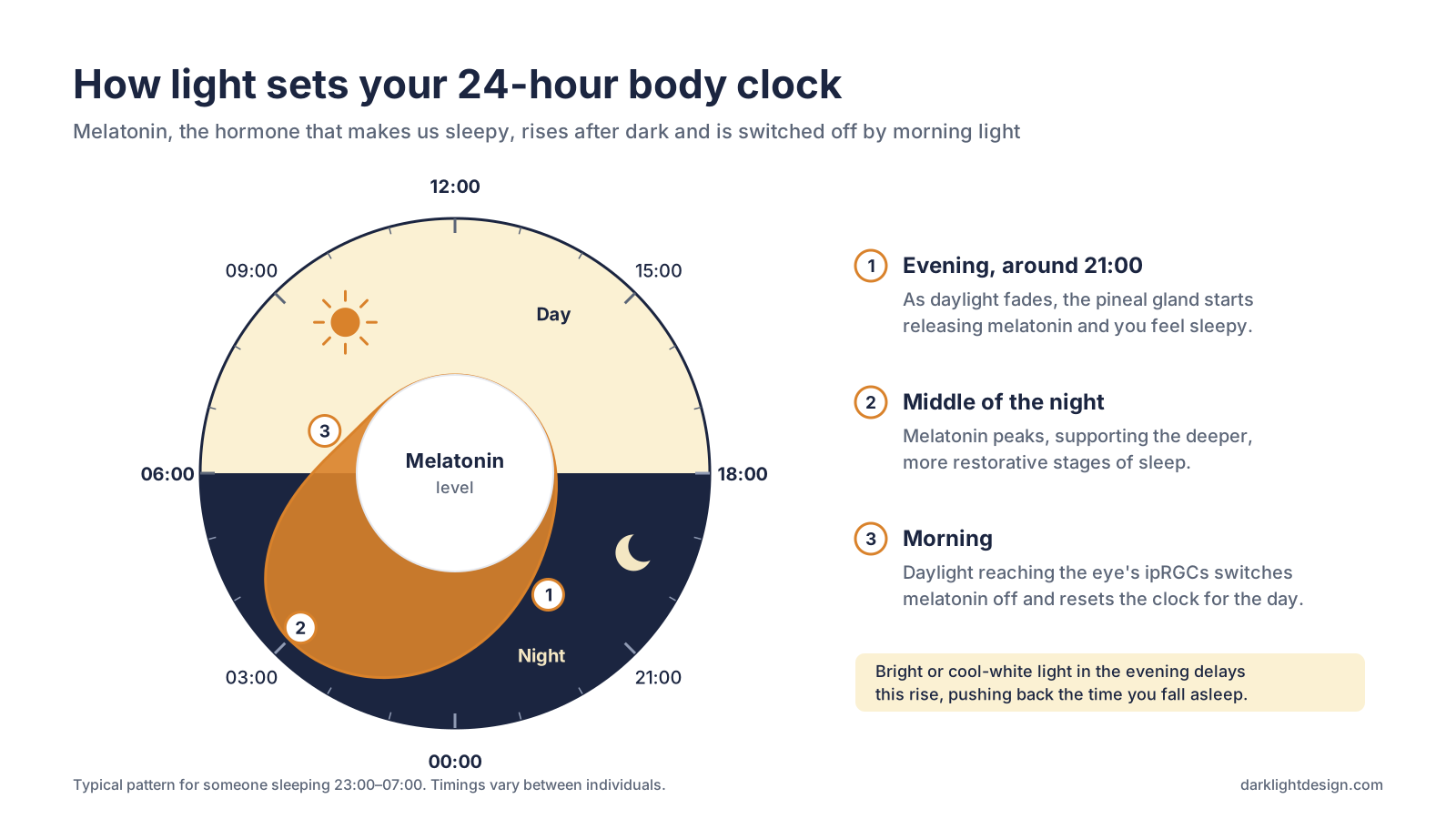
Diagram of the 24-hour circadian rhythm showing melatonin rising after dark and falling with morning light
View full size 24hr body clock diagram
In natural conditions, our rhythms synchronise with sunrise and sunset but artificial light, especially when it’s dark outside, disrupts this harmony.
Light, Melatonin & Sleep Quality
In response to darkness the pineal gland in the brain starts to produce melatonin, which is the hormone that promotes sleep. However, exposure to even dim light slows or halts this production which, in turn, delays sleepiness.
Light at night can also hinder the transitions between our sleep cycles. Generally, an 8 hour period of sleep will consist of 4-6 separate sleep cycles, with each of these cycles containing multiple stages including REM and non-REM sleep. Too much light at night can cause us to wake up in between each of these sleep cycles which reduces the time we spend in the deeper, more restorative stages - also known as ‘quality sleep’.
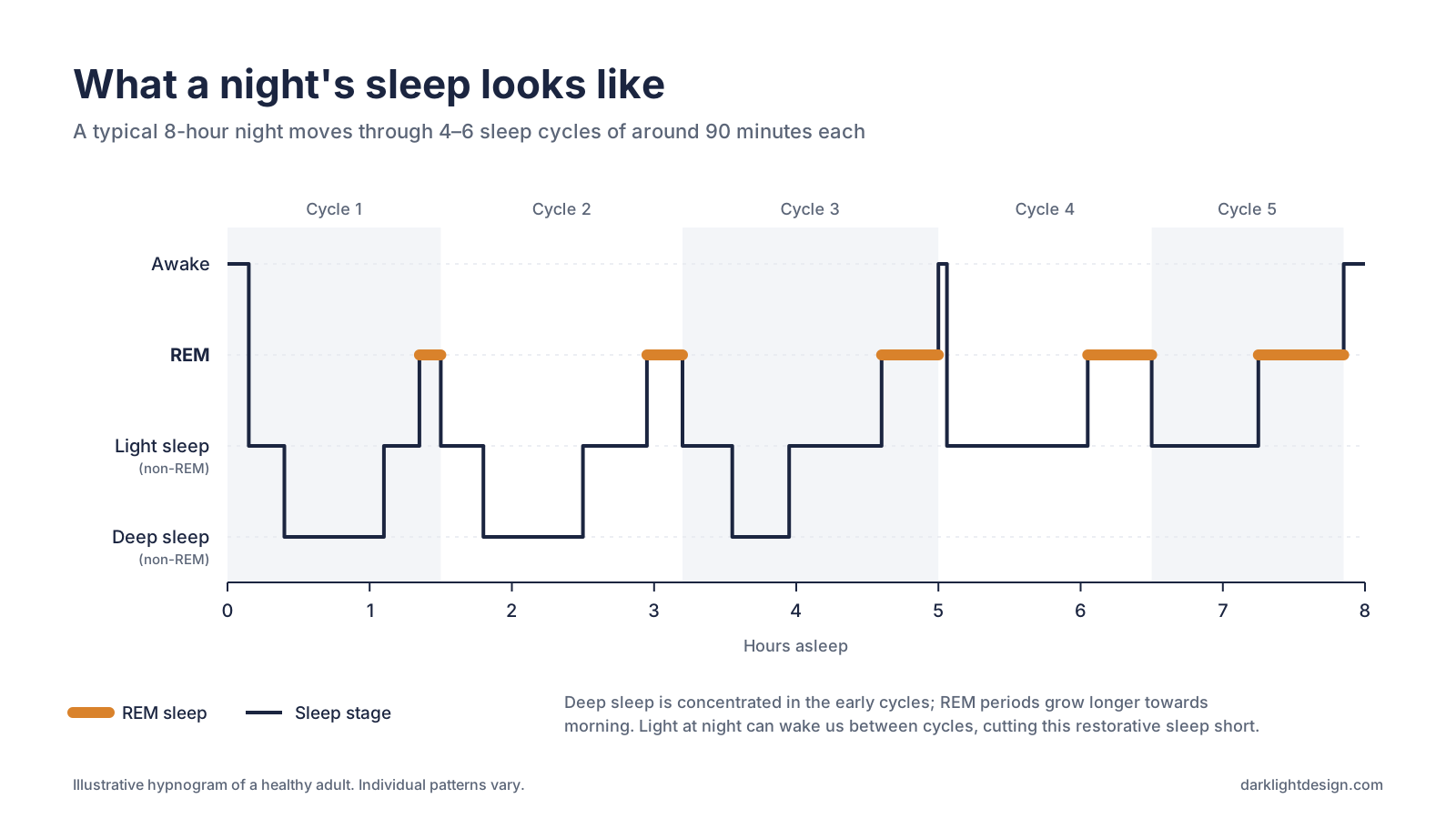
Hypnogram of an 8-hour night showing 4–6 sleep cycles moving between REM and non-REM sleep stages
View full size sleep cycle hypnogram
Why Sleep Is Important
The average person spends about 26 years sleeping, that’s one-third of our lives! So why do we do it? It’s simple - without sleep we can’t survive, and recent findings show that sleep performs many different functions.
Essential functions of sleep:
- Supporting our immune system function to maintain cardiovascular health, regulate inflammatory responses & fight infection
- Flushing out toxins in our brain that accumulate during the day, to prevent neurodegenerative diseases
- Consolidating our daily experiences into long-term memories as well as removing information we no longer need
- Regulating our hormones and metabolism to protect us from conditions like obesity & type-2 diabetes
- Regenerating stem cells - emerging research suggests that sleep allows them to enter into a resting state to avoid exhaustion, ensuring they’re available for tissue repair.
Unfortunately, research shows that exposure to light at night, especially blue light, causes our sleep to suffer.
Poor sleep contributes to an increased risk of certain conditions:
- Depression
- Circadian rhythm sleep-wake disorders such as shift work disorder
- Diabetes
- Cardiovascular issues
- And even some cancers.
Let’s look at how this can happen.
How Blue Light Affects Sleep
Blue light is naturally most prevalent at morning and midday, whereas the light we see at dawn and dusk is rich in the wavelengths that sit at the opposite end of the spectrum - warmer red and orange hues. We evolved with these natural variations in light which regulate our sleepiness and alertness, but artificial light disrupts this physiological process.
Blue Light: A Brief Explanation
Sunlight contains a combination of:
- Invisible wavelengths, e.g. ultraviolet (UV) & infrared (IR)
- Visible wavelengths, e.g. the colours that we see in a rainbow.
The visible light from the sun is a combination of all the colours of light that we can perceive with our eyes, including blue light.
Blue light is a short-wave, high-energy wavelength whose range is roughly 400–500nm. Melanopsin is most sensitive at around 480nm, which is why blue light suppresses melatonin so strongly.
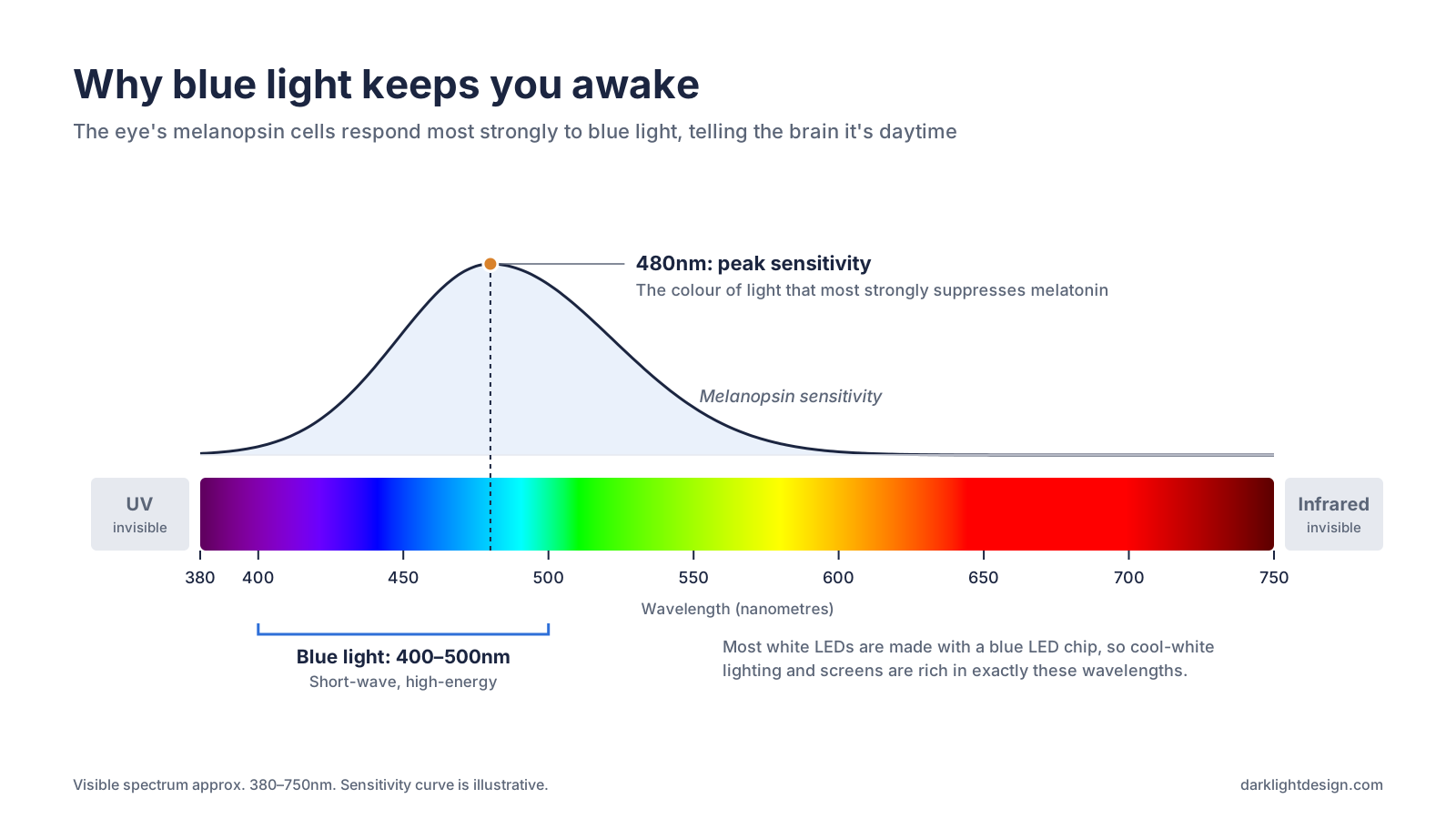
Visible light spectrum with blue light at 400–500nm highlighted and melanopsin's peak sensitivity at 480nm
View full size light spectrum diagram
The recent invention of artificial light means that during late afternoon, and even when it’s dark outside, our eyes remain exposed to bright electric light which is rich in blue wavelengths and this disrupts our hormone production.
Effects Of Blue Light At Night
Blue wavelengths are beneficial to us during daylight hours as they boost our attention, reaction times and mood. However, they are the most disruptive light colour to us at night.
Blue wavelengths are prevalent in modern lighting and devices as most white LEDs are made using a blue LED coated with phosphor, which means that many of them emit more blue light than traditional incandescent bulbs - especially cool-white LEDs.
Common artificial sources of blue light at night:
- Smartphones
- Tablets
- Computers
- TVs
- Bright, cool-white LED lighting (typically 4000K and above)
- eReaders
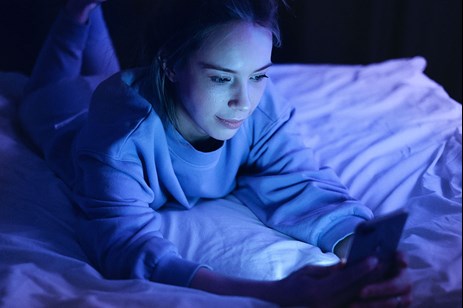
Woman using a smartphone in bed in a dark room, exposing their eyes to blue light before sleep
According to the 2014 study comparing the effects of reading an eReader as opposed to a printed book before bed (Chang et al., PNAS), heavy evening usage of electronic devices such as eReaders and the resulting exposure to close-range blue light at night makes it harder for us to fall asleep and reduces our sleep quality.
Effects of blue light at night:
- Increases alertness & mental stimulation
- Suppresses melatonin more strongly than other wavelengths
- Delays our circadian timing and sleep onset
Artificial light has revolutionised our lives, but is the way that we’re currently using it costing us our health?
What Is The Best Light Colour For Sleep?
Warm, dim light is best in the evening. Aim for a colour temperature of 2700K or lower, ideally around 2200K in the hour or two before bed, at low brightness. Red and amber light have the least effect on melatonin because the eye's light-sensing ipRGCs are least responsive to long wavelengths.
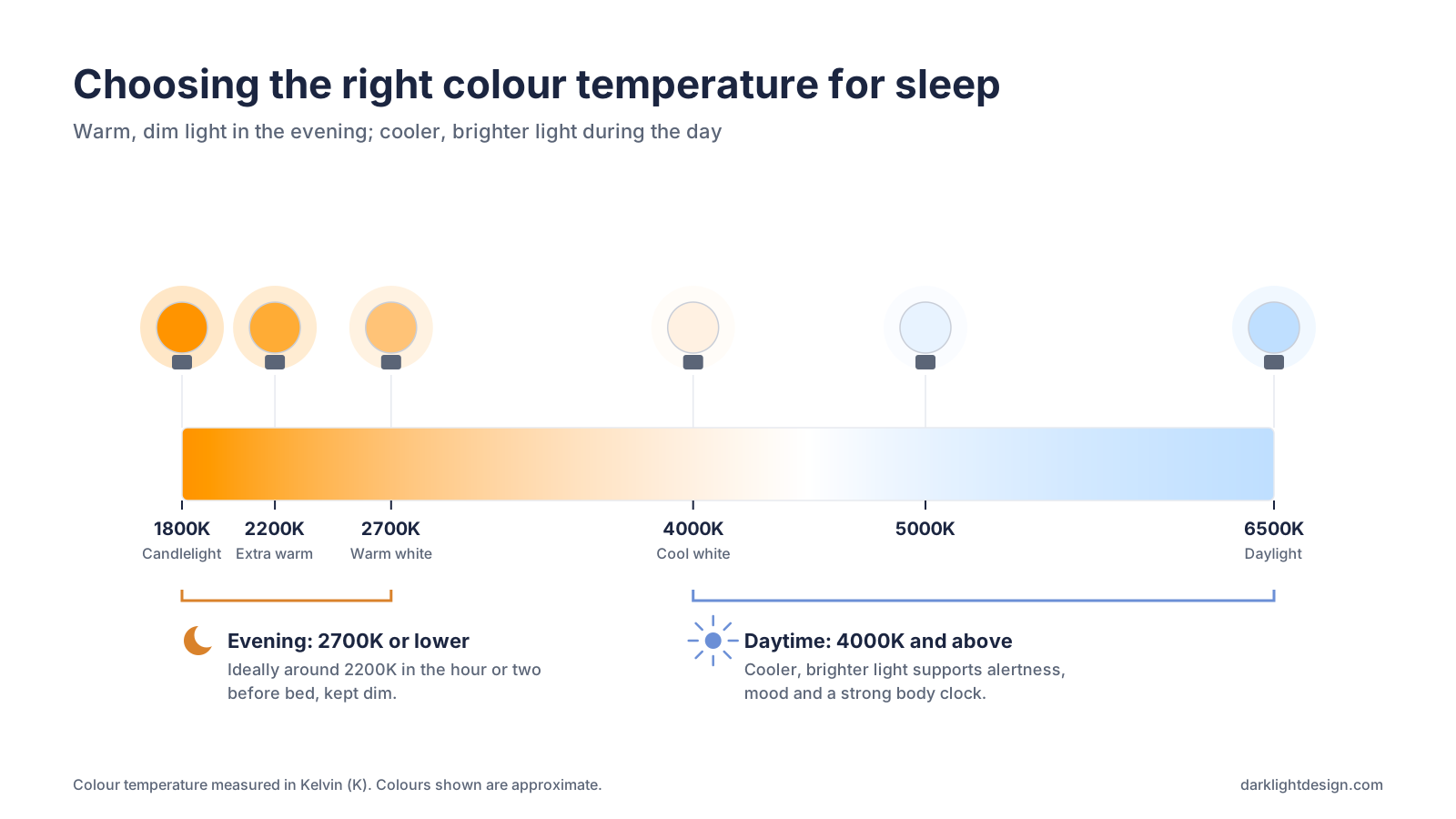
CCT diagram: from 1800K to 6500K showing warm 2200–2700K light as best for the evening.
View full size CCT for sleep diagram
An international expert consensus published in 2022 on daytime, evening and night-time light levels (Brown et al., PLOS Biology) recommends these brightness levels, measured in lux.
Optimum brightness levels for lighting:
- Daytime: at least 250 lux melanopic EDI at eye level
- Evening (from 3 hours before bed): no more than 10 lux melanopic EDI
- During sleep: no more than 1 lux, as close to darkness as possible
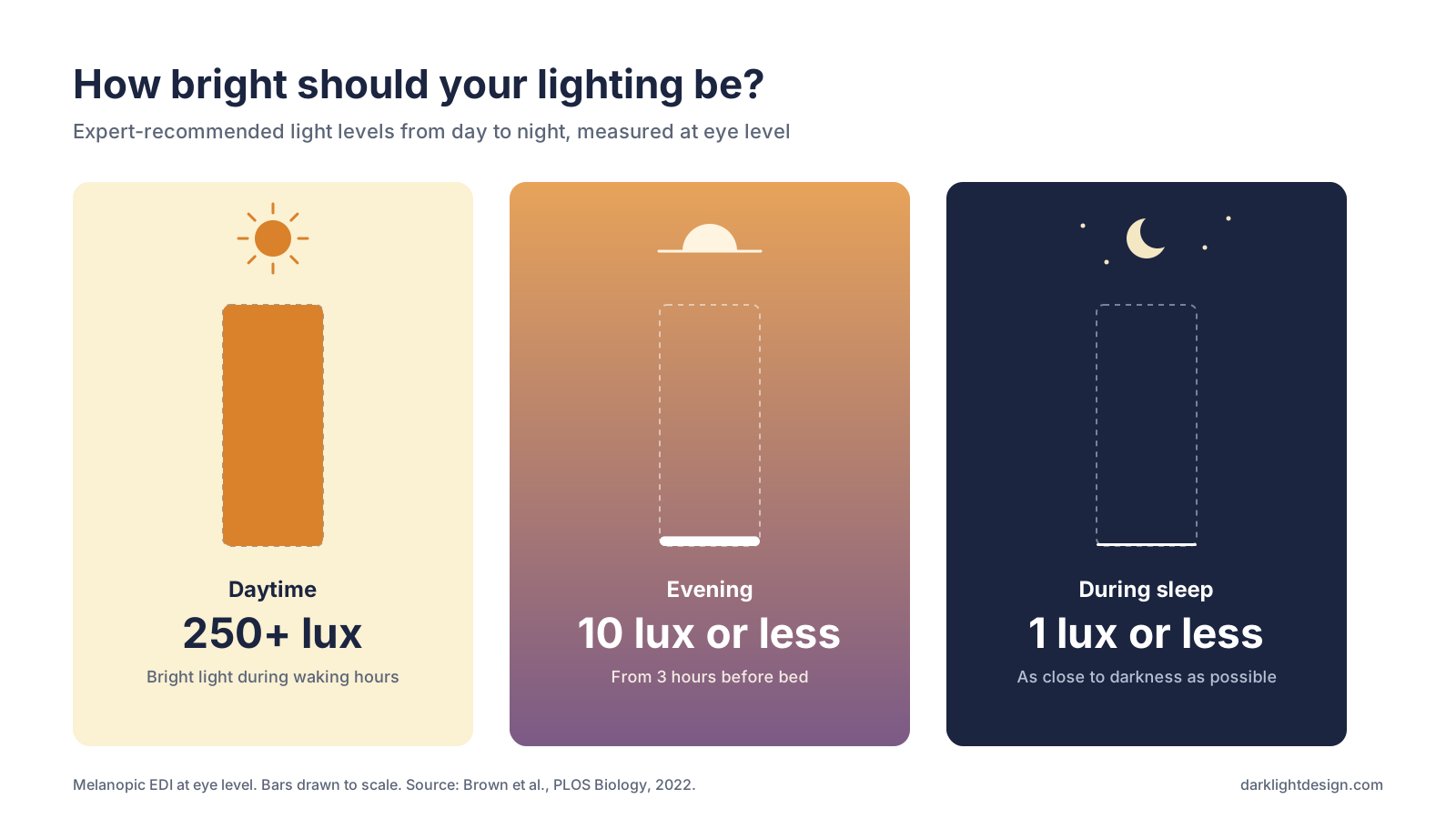
Recommended melanopic EDI: 250+ lux by day, 10 lux or less in the evening and 1 lux or less during sleep
View full size recommended light levels diagram
In practice, this means bright, cooler light during the day and warm, low-level lighting in the evening. Tunable white lighting and dim-to-warm fittings can handle this shift automatically.
How To Get Better Sleep Naturally
Whether you choose to invest in the latest technology or simply make a few adjustments to your day, improving your sleep hygiene routine maximises your chances of enjoying a good night’s rest without having to raid the medicine cabinet.
Spend Time Outdoors Every Morning
As little as 30 minutes of natural daylight helps strengthen our circadian rhythm by supporting our alertness, mood and energy during the day, and is a natural way of improving our sleep quality and consistency at night. Morning light exposure is the most effective; even overcast skies are beneficial to us.
Results of exposure to natural daylight at high intensities:
- You’re likely to start yawning earlier in the evening
- Helps you fall asleep more easily
- Affects how long you sleep for
- Improves sleep quality overall
Improve Evening Lighting
Improve your chances of a restful night by transitioning from bright daytime lighting to warmer, lower lighting as bedtime nears.
How to achieve the ideal evening lighting for sleep:
- Table lamps & floor lamps provide low level accent lighting
- Tunable white bulbs change colour from cool white to warm white
- Dimmer switches soften the brightness of your room
- Automated human centric lighting systems mimic the effects of natural daylight
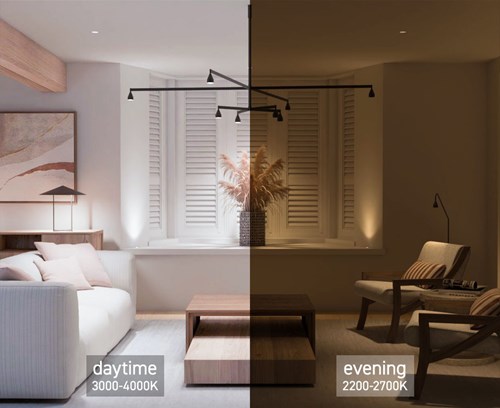
The same living room in cool white daytime light and warm, dimmed 2200K evening light from tunable white fittings.
Reduce Blue Light Exposure From Screens
Ideally, we’d all avoid bright screens for 2-3 hours before bedtime but if total avoidance isn’t a practical (or desirable) option for you there are a couple of changes you can make to lessen the impact of blue light on your sleep.
Ways to reduce blue light exposure in the evening:
- Use "night mode" or blue-light-filtering apps on your devices
- Consider wearing amber or orange-tinted glasses which filter out most blue & some green light
- Invest in a pair of blue-light-blocking glasses which block only blue light but still allow you to see normally – especially useful for night shift workers.
Create A Dark Sleep Environment
Sleeping with the lights on can have a negative impact on our health. A 2022 study (Mason et al., PNAS) reveals that light exposure during sleep impairs our cardiometabolic function. You can avoid these unwanted side effects by sleeping in as much darkness as possible and making some simple adjustments.
How to create a dark sleep environment:
- Use blackout curtains or eye masks
- Remove unnecessary electronics from the bedroom
- Keep lights off while sleeping
- Use dim red lights for night lights, as red light is least likely to suppress melatonin because ipRGCs are least sensitive to long wavelengths. It’s also close in colour to the firelight humans evolved with.
If you’re unable to remove all electronics from the bedroom, the NHS sleep guidance website recommends turning clocks so they face away from you and placing your mobile phone face down to reduce light.
Circadian Rhythm Light Therapy
Circadian rhythm light therapy is proving to be significantly beneficial for treating the severe sleep-wake issues found in medical conditions in which insomnia is a common feature, as demonstrated in the 2019 study on the effects of light on human circadian rhythms, sleep and mood (Blume et al., PMC).
Medical conditions which benefit from circadian rhythm light therapy:
- Jet lag & shift work disorder
- Psychiatric & mood-related conditions
- Dementia
- Neurodegenerative conditions such as Parkinson’s
- Conditions affecting patients in intensive care units.
Circadian rhythm light therapy involves sitting near a light box, typically 10,000 lux, at scheduled times under medical guidance. The strong lamp mimics daylight and can alleviate the symptoms of conditions whilst promoting healing and recovery.
Designing For Sleep: Notes for Architects & Interior Designers
For specifiers, human centric and circadian lighting is moving from a nice-to-have to a brief requirement, particularly in hospitality, healthcare, care homes and high-end residential projects. Human centric lighting is recognised by RIBA and CIE, and is included in the IWBI’s WELL Building Standard criteria, and clients are increasingly asking for it.
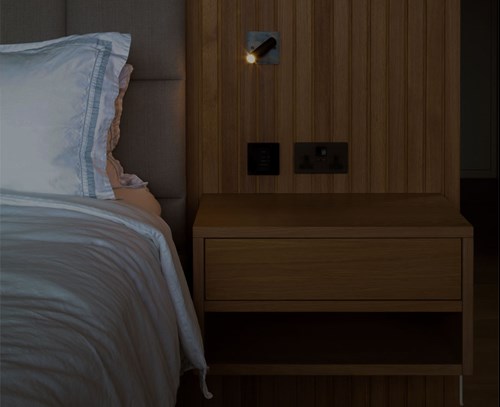
Hotel bedroom with dim-to-warm lighting and low-level warm night lights designed to protect guests' sleep.
Key design considerations of human centric lighting:
- Vertical illuminance matters. Circadian impact is measured at eye level, not on the work plane.
- Tunable white (around 2700K–6500K) lets a space follow a daylight-like curve through the day.
- Dim-to-warm fittings mimic incandescent behaviour, getting warmer as they dim. They're ideal for bedrooms, hotel rooms and dining.
- Controls and scheduling turn good fittings into a genuinely circadian scheme.
- Low-level, warm night lighting in corridors and bathrooms protects sleep in hotels and care settings.
Specifying human centric lighting for a project? Talk to our lighting design team.
Lighting The Way To A Better Night’s Sleep
Light is the single most important external factor affecting our sleep; it influences our body clock, hormone production and sleep cycles. Spending increasing amounts of time indoors and exposing ourselves to light, especially at night, can significantly impact our sleep and long-term health. Making just a few simple changes - more daylight in the morning, less blue light at night - can meaningfully improve our sleep quality, elevate our mood and increase our overall wellbeing. All of which to us sounds, well, perfectly dreamy.
Disclaimer
This article is written by DLD's lighting specialists as a general overview. It isn't medical advice. If you're experiencing ongoing sleep problems, please speak to your GP.
FAQs
Q. Does blue light really affect sleep?
Yes. Blue light around 480nm is the wavelength most strongly detected by the eye's melanopsin-containing cells, which signal the body clock. Evening exposure suppresses melatonin and can delay sleep, although screen brightness and total light exposure matter as much as colour.
Q. What colour light helps you sleep?
Warm, dim light of 2700K or lower in the evening, and red or amber light for night lights. These long wavelengths have the least effect on melatonin.
Q. Is it bad to sleep with a light on?
Research links sleeping with even moderate light to poorer sleep quality and metabolic effects. Aim for darkness, using blackout blinds or an eye mask. If you need a light, use a very dim red or amber one.
Q. How long before bed should I avoid screens?
Ideally two to three hours. If that isn't practical, use night mode, lower the screen brightness and keep devices at a distance. Wearing blue-light-blocking glasses whilst using a device before bed has been shown to reduce the suppression of melatonin, as it blocks the blue light 480nm wavelength.
Q. What is human centric lighting?
Human centric lighting (HCL) – also known as circadian lighting, integrative lighting or biodynamic lighting - is a lighting design approach that adjusts colour temperature and intensity through the day to support the body's circadian rhythm. It usually uses tunable white fittings and automated controls.
So what's next?
- Read more posts on Human Centric Lighting
- Discover our Lighting For Health range - a curated collection designed to support Human Centric Lighting projects.
- Ready to start your HCL project? Or still have questions?
Contact us on 01189 882294 or [email protected]
We're happy to help :)